
A Guide to Custom Kraft Boxes for Product Packaging
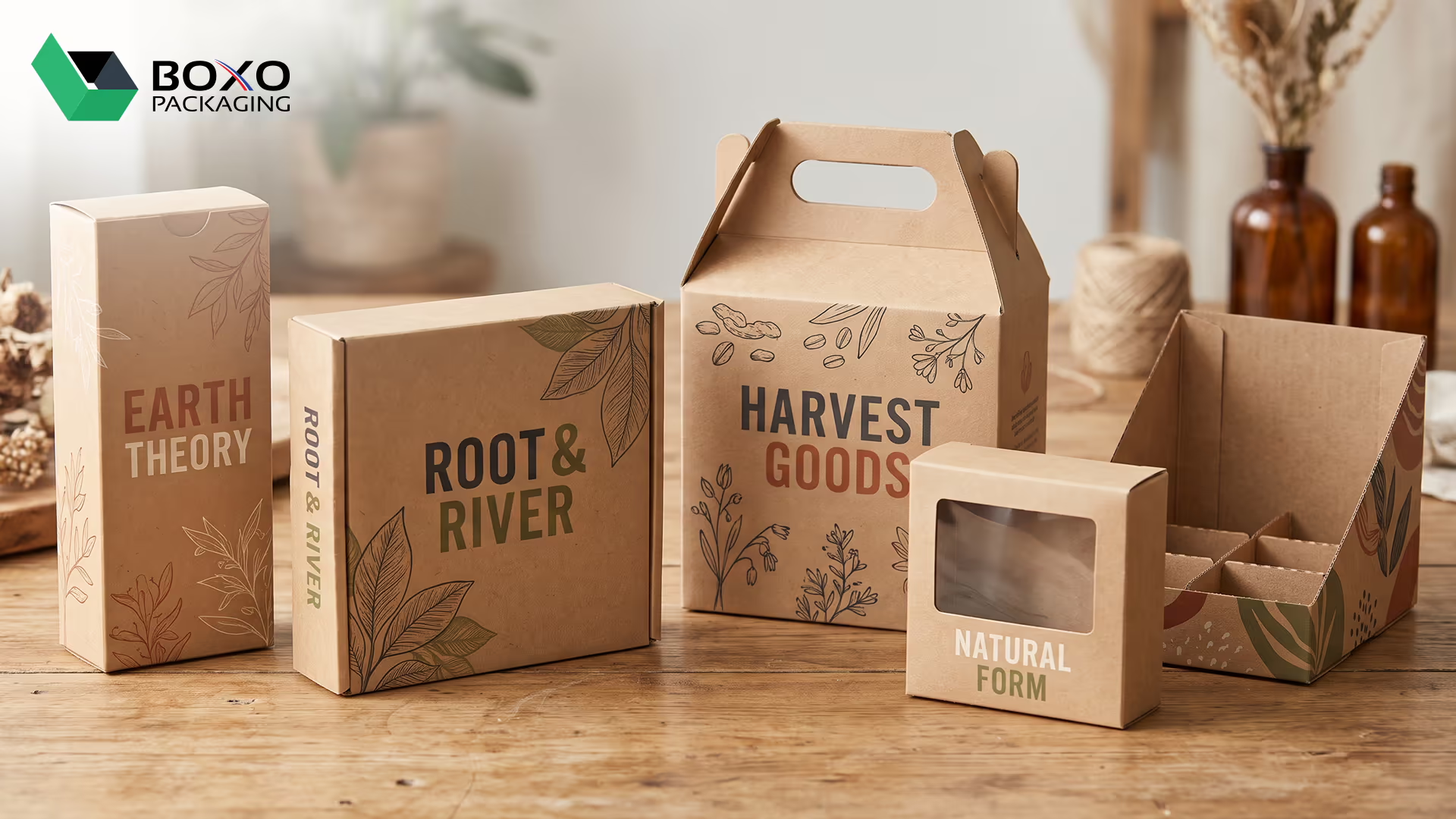
Choosing a box can feel like a small decision until the first order arrives a centimetre too tall or a shade too dull. Natural brown board is popular because it looks honest, travels well, and suits almost any product. This guide to Custom Kraft Boxes walks you through the choices in the order you will actually face them. Each step comes with a simple check you can do at your own table.
Start With the Product, Not the Box
Every good order begins with a tape measure. Take your finished product, with any tissue, insert, or leaflet that will share the carton, and measure it at its longest, widest, and tallest points.
Write the internal dimensions in the order length, width, height so nobody reads them back to front when the order is placed. If you sell several items, measure the smallest and the largest. A box that fits your best sample may not fit your average one.
Matching the Style to the Way You Sell
A mailer box suits parcels, a tuck-top suits shelves, and a tray with a sleeve suits gifts. The right choice depends on who opens it and where.
Ask yourself a few plain questions. Will it travel by courier or sit on a counter? Will customers keep it? Will you pack fifty a day or five? A style that looks lovely but takes a minute to assemble will frustrate you by the second week.
Understanding Board Strength
Thickness is not just a number on a quote. It decides whether a lid stays flat, a base holds a heavy item, and a stack survives a stockroom. Tell your supplier the filled weight and how the box will travel, then ask which grade they suggest and why. Fill a sample, lift it by the sides, and stack a few overnight. If the bottom one bows, the board needs to be stronger.
Getting Print to Look Right on Brown Stock
Brown board changes how ink behaves. Dark, bold artwork usually reads well, while pale tones and hairline strokes can look faint or break up.
Ask for a printed sample with your own logo, not a generic example, and look at it in daylight and under indoor light. Rub the print with a dry cloth, then a barely damp one, to see whether it marks. Brown board is often linked with recyclable materials, but avoid making environmental claims unless your supplier can show you evidence you can verify. If the boxes will hold food, cosmetics, or other regulated goods, rules differ by region, so check the current requirements for your market. This is general information, not legal advice.
Four Details to Confirm Before You Request a Quote
Send these together, and your quote will be quicker and easier to compare:
- The internal length, width, and height, measured around your finished product
- The board strength needed for the filled weight and the way it will travel
- The print colours, finishes, and where the artwork should sit
- Your first order quantity and the reorder volumes you expect
Why a Sample Turns Advice Into Proof
Reading a guide is useful, but holding a box tells you far more. At Boxo Packaging UK, the process starts with you sending over your product, so the fit is judged against the real item. You then request samples, test them with your own filler, handling, and posting routine, and review the fit, print, and structure together. Production begins only once you are satisfied, which makes it much easier to settle on Custom Kraft Boxes that suit your range.
Good boxes come from small, patient checks: honest measuring, a sensible style, tested strength, and print judged in real light. Boxo Packaging supports that careful, sample-first approach, so your products arrive looking tidy and your customers feel the care behind them.
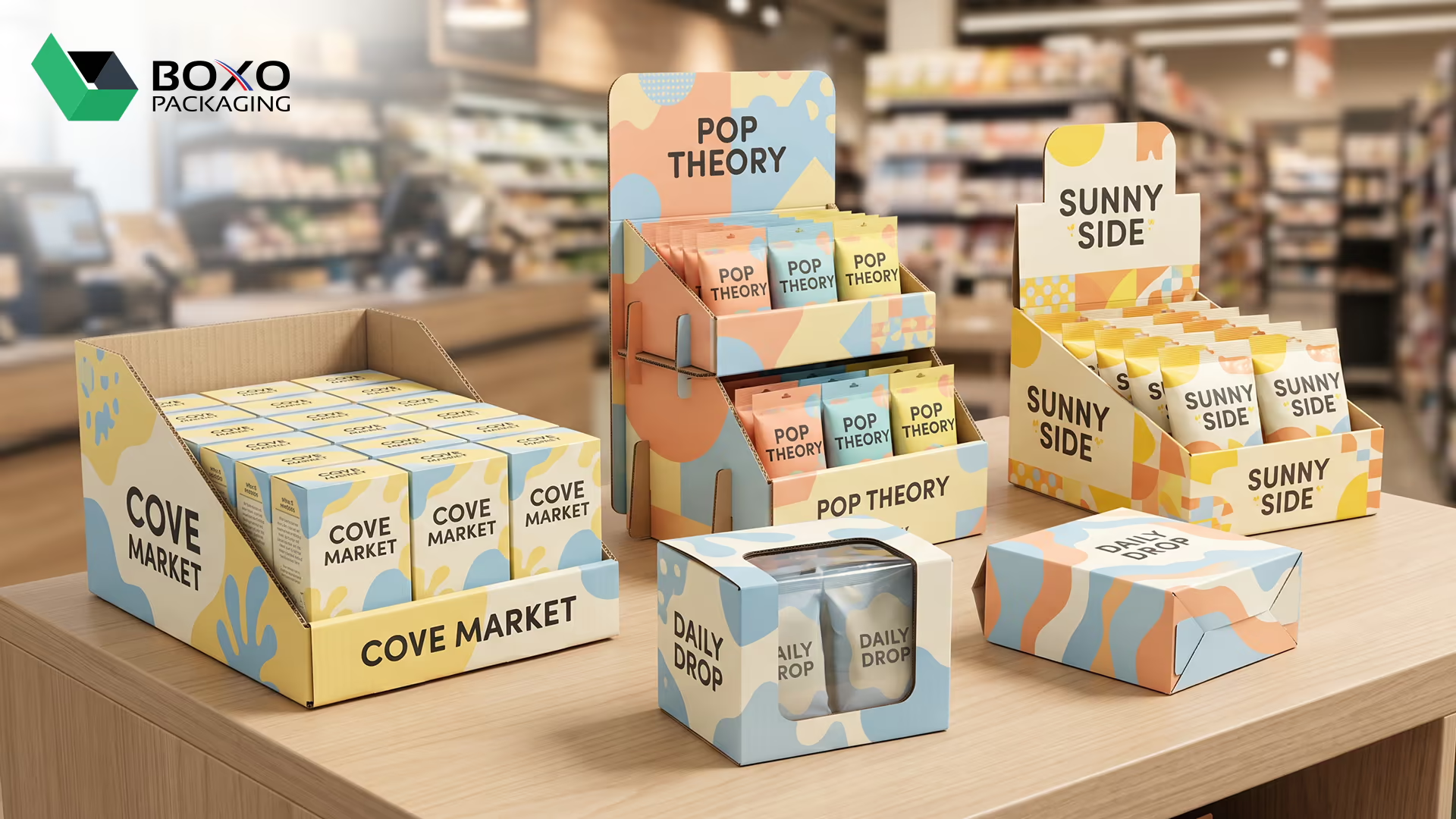
6 Tips for Choosing the Right Display Packaging
A good display does a quiet job: it holds stock, draws the eye and stays tidy while staff get on with their day. A poor one ends up half empty, pushed under the till or sent back to the stockroom. Choosing Display Packaging is easier when you work through a few practical checks in order. These six tips cover what to measure, test, and ask before you commit to an order.
1. Measure the Space You Really Have
Start with the counter or shelf, not the product. Measure the free width, depth, and height in the places where the display will actually sit, and design for the smallest of them. Write the internal dimensions in the order length, width, height so nobody reads them back to front when the order is placed. A unit that overhangs the edge or blocks the card reader will be moved aside within a week.
2. Choose a Style That Suits How Fast You Sell
An open front makes restocking quick and suits fast sellers. A hinged flap keeps stock cleaner but adds a step. A pull-out drawer holds spares behind the front row but needs a stronger build. Fill a sample of each style with real stock and refill it ten times. The one that feels easy on the tenth refill is usually the right choice.
3. Keep Products Upright and Facing Forward
A display looks smart only while items stay straight. Tilted bases, shallow lips, and small dividers help products slide forward as the front row sells. Load a sample, remove two or three items, and watch what happens. If the rest lean, slip, or tip, adjust the lip height or the base angle before production begins.
4. Time the Assembly and the Refill
Staff is busy, and a display that needs instructions rarely makes it onto the floor. Hand a flat sample to someone who has never seen it and time them with a stopwatch. Note every pause, whether at a tab, a fold, or a lock. Pre-glued bases and simple locks usually save the most time, and any hesitation is worth fixing now rather than after delivery.
5. Check Print in Real Light
Shop lighting, daylight, and exhibition lamps all change how colour looks. Ask for a printed sample and view it in each kind of light you expect.
Keep your brand name large and your message short, so it reads from a few steps away. Rub the print with a dry cloth, then a barely damp one, to see whether it marks. Where your products carry labelling requirements, rules differ by region, so check the current requirements for your market. This is general information, not legal advice. Avoid printing material or environmental claims unless your supplier can show you evidence you can verify.
6. Test Strength, Stacking and Storage
Displays are moved for cleaning, stacked in stockrooms, and carried across shops. Fill a sample, lift it by the sides, and stack several overnight to see whether the bottom one bows.
Measure the flat size of one unit and multiply by your quantity to see how much storage you need. Keep stock dry and off the floor, because damp air can soften board and bend folds.
Four Details to Confirm Before You Request a Quote
Send these together, and your quote will be quicker and easier to compare:
- The footprint and height available, plus the number of units the display should hold
- The filled weight and the way the unit will be moved or stacked
- The front style you prefer, such as open, flap or drawer
- The print colours, finishes and your expected order quantity
Why a Filled Sample Beats a Drawing
A flat drawing cannot show how a unit copes with a rushed refill or a busy till. At Boxo Packaging UK, the process starts with you sending over your product, so the fit is judged against the real item. You then request samples, test them with your own staff and stock, and review the fit, print, and structure together. Production begins only once you are satisfied, which makes it easier to settle on Display Packaging that suits your shop.
The best displays come from honest measuring, a style matched to your sales speed, and a sample tested the way staff will really use it. Boxo Packaging supports that careful, sample-first approach, so your shelves stay full and your products stay in view.
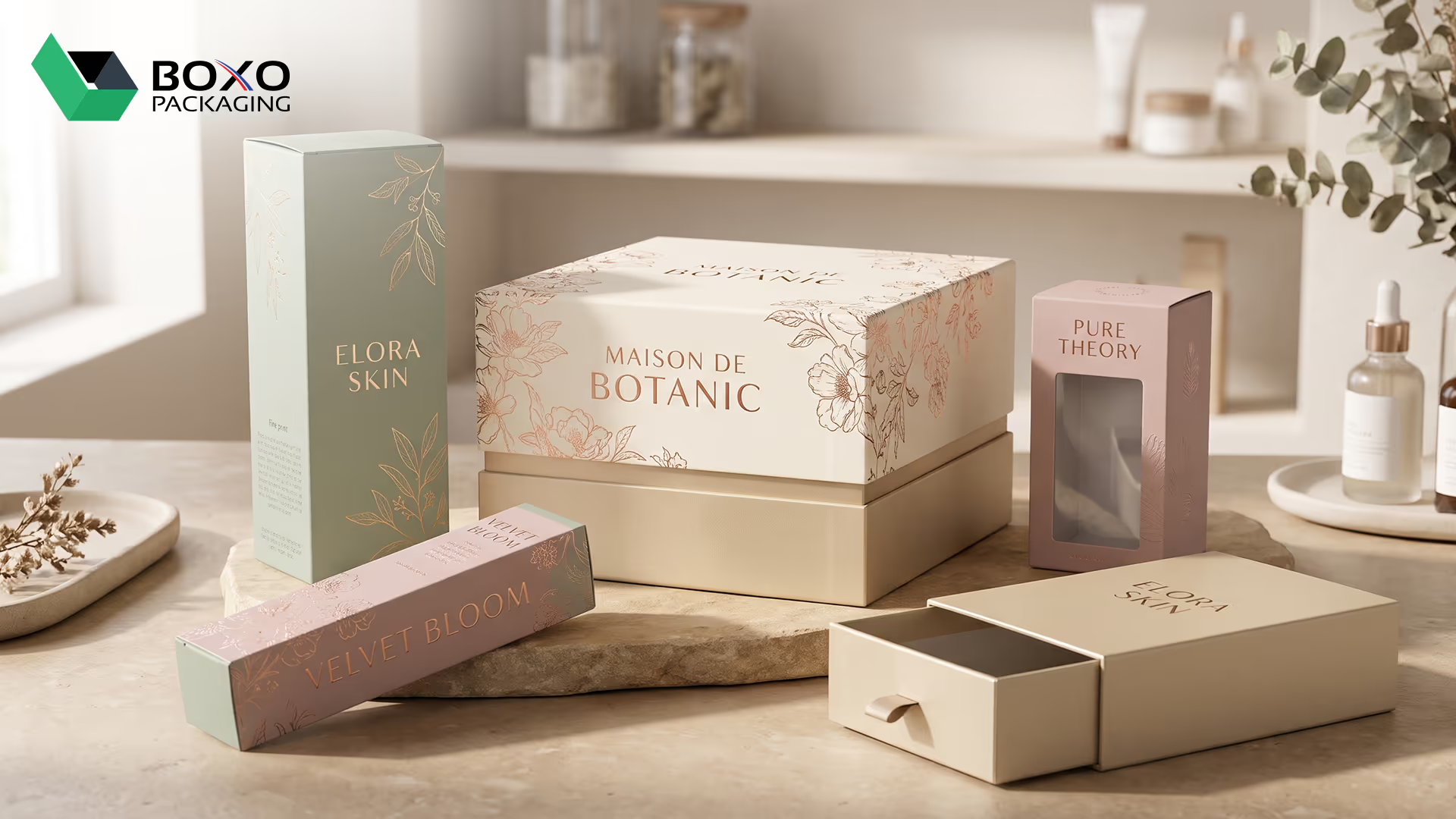
How Do Cosmetic Boxes Protect Beauty Products?
A serum, a lipstick, or a jar of cream is only as safe as the carton around it. Customers rarely think about protection until a bottle arrives cracked or a pump has leaked across the tissue. This guide explains how Cosmetic Boxes protect beauty products, from the first knock in the post to the last day on a bathroom shelf. Each point comes with a simple check you can try at your own table.
Absorbing Knocks and Drops
A parcel is lifted, tilted, stacked, and sometimes dropped. The board walls take the first hit, and their strength decides whether the force reaches the bottle inside. Fill a sample with your real product and drop it from waist height onto a hard floor. Open it carefully and check the corners, the lid, and the glass. If anything has dented or shifted, ask your supplier about a stronger board or a deeper insert.
Holding Products Still With Inserts
Most damage comes from movement, not impact. A bottle that slides inside a loose carton knocks its own cap, scuffs its label, and may crack at the neck. Board cradles, pulp trays, and folded dividers each grip a different shape. Close a filled sample, shake it gently, and listen for clicking. Turn it upside down and listen again. Any movement means the insert needs adjusting before production begins.
Guarding Against Leaks and Spills
Cartons cannot make a leaking bottle watertight, but they can limit the mess and make a problem easy to spot. A snug fit keeps a pump from being pressed, and an inner wrap can catch a small leak before it reaches other items. Stand a filled sample upright and then on its side for a day, then check the inside walls for seepage. Where a product is prone to leaking, tell your supplier early so a suitable board and liner can be suggested.
Shielding From Light, Heat and Damp
Some formulas change in strong sunlight or warm vans, and damp air can soften board and mark print. A carton acts as a first layer against all three. Leave a filled sample near a sunny window for several hours, then place another in a cool, damp room overnight. Look for softened walls, faded print, or changes to the product. Rules on storage claims and product wording differ by region, so check the current requirements for your market. This is general information, not legal advice.
Keeping Labels, Print and Batch Details Clean
Protection also covers information. Ingredient lists, directions, and batch details must stay readable from the factory to the customer. Rub a printed sample with a dry cloth, then a barely damp one, to see whether the ink marks. Leave a flat panel for the details a customer needs, away from folds and heavy ink. Avoid printing material or environmental claims unless your supplier can show you evidence you can verify.
Four Details to Confirm Before You Request a Quote
Send these together, and your quote will be quicker and easier to compare:
- The internal length, width and height, measured around each product with its cap or pump
- The insert style needed to hold every item steady
- The print colours, finishes and the space reserved for ingredients and directions
- Your first order quantity and the reorder volumes you expect
Letting Real Products Test the Protection
A flat drawing cannot show how a bottle behaves in a courier van. At Boxo Packaging UK, the process starts with you sending over your product, so the fit is judged against the real item. You then request samples, test them with your own filler, handling, and posting routine, and review the fit, print, and structure together. Production begins only once you are satisfied, which makes it easier to choose Cosmetic Boxes that protect your range.
Good protection comes from small, checkable details: firm inserts, tested board strength, and print that survives handling. Boxo Packaging supports that careful, sample-first approach, so every product reaches your customer in the condition you intended.