
How Tray and Sleeve Packaging Is Built, Step by Step Guide
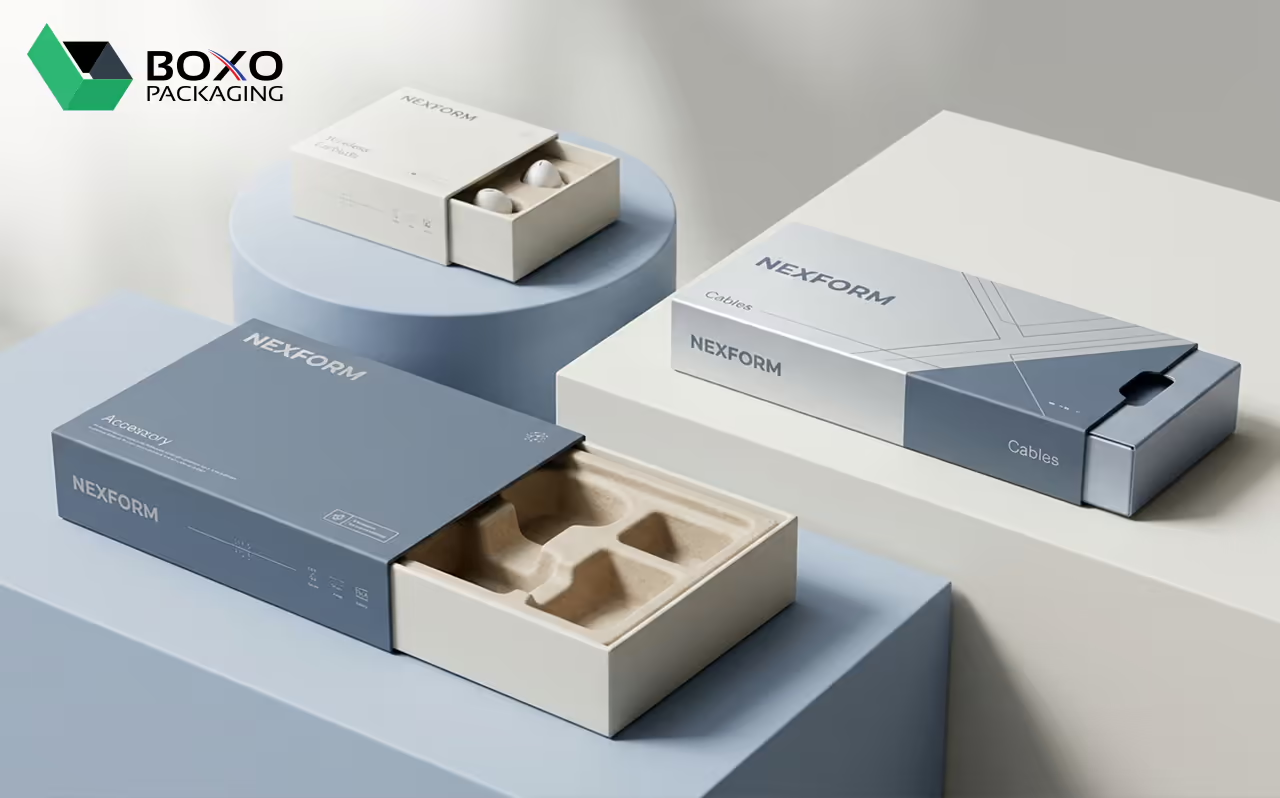
Hold a Tray and Sleeve Boxes, and the first thing you notice is the slide, which should glide, grip, and stop cleanly. That small movement is why Tray and Sleeve Packaging suits gifts, candles and cosmetics, yet it is unforgiving when the sizes are a millimeter off. This guide covers the mechanics, formats, board, printing, costs and checks so you can brief a supplier clearly.
The Simple Mechanics behind the Slide
A tray and sleeve box has two parts: an open tray that holds the product and a sleeve that slides over it to close. Friction does the holding, so no glue, tape, or lid is needed to keep it shut. The sleeve has to be fractionally bigger than the tray to allow for board thickness and any coating. Your supplier works this out on the dieline, the flat template showing every cut and crease, and should confirm it with a sample rather than a promise. Most boxes add a thumb notch, ribbon pull, or cut out, so the customer can push the tray out without wrestling the sleeve.
Formats You Will Be Asked to Choose Between
Most projects land on one of four builds. The right one depends on product weight, budget, and how premium the opening should feel.
- Rigid Tray with Paper Sleeve: A thick greyboard base with a printed sleeve, suited to gifts and premium ranges.
- Folding Carton Set: Both parts cut from printed paperboard, delivered flat-packed and economical.
- Pull-out Drawer Box with Ribbon Pull: a rigid tray within a sleeve with a fabric tab, good for many items like jewellery, cosmetics, and health/beauty products.
- Kraft Sleeve Over Plain Tray: A natural-looking build that carries all the branding on the sleeve.
Board Weights and What They Do to the Slide
Board choice affects how the slide feels as much as how the box looks. For folding versions, 300 to 400 GSM SBS board is a sound starting point, while Kraft board at 250 to 350 GSM suits natural, handmade brands. Thicker board gives a crisper edge but needs more clearance, and thin board can buckle when the sleeve is pushed. Rigid greyboard trays hold their shape underweight, which is why heavier gifts and glass items usually go that way. If boxes ship in bulk, an E-flute corrugated outer protects the sleeves from crushing, with B-flute for heavier loads.
Printing and Finishing Without Spoiling the Fit
Most of the branding sits on the sleeve, so that is where the print budget tends to go. Digital printing suits short runs and several designs, offset gives steady colour on larger orders, and flexographic printing works on Kraft with water-based inks. Coatings change the slide. A glossy laminate can feel slippery, and a heavy one adds thickness, while uncoated or matt varnished board often grips better. Foil and lamination also make recycling harder, so use them only where they earn their place.
Cost, Reuse and Footprint
Cost follows quantity, board, print, finishing, and whether the build is rigid or folding. Rigid sets cost more and cannot ship flat, while folding sets are cheaper and kinder to storage. At Boxo Packaging UK, the first thing we ask is simple: how heavy is the product, what are its dimensions, and how will it reach the customer?
Understanding tray and sleeve packaging costs early shows where a simpler build saves more than extra decoration. FSC-certified board shows responsible sourcing, but avoid claiming a box is “fully green,” as every material has some footprint. A box that customers keep and reuse can justify some extra weight.
Test the Slide Before You Sign Off
Ask for a physical sample and fill it with real product, not a dummy. Slide it open and shut twenty times, tip it, lift it by the sleeve, and check the proof for colour, text, and notch position. Allow extra lead time too, because production and freight can take several weeks.
A reliable supplier will question your specification rather than simply accept it. That is how we work at Boxo Packaging UK, because fixing a problem early costs far less than a reprint, especially with tray and sleeve boxes.
How Eco-Friendly Boxes Affect Consumer Behaviour
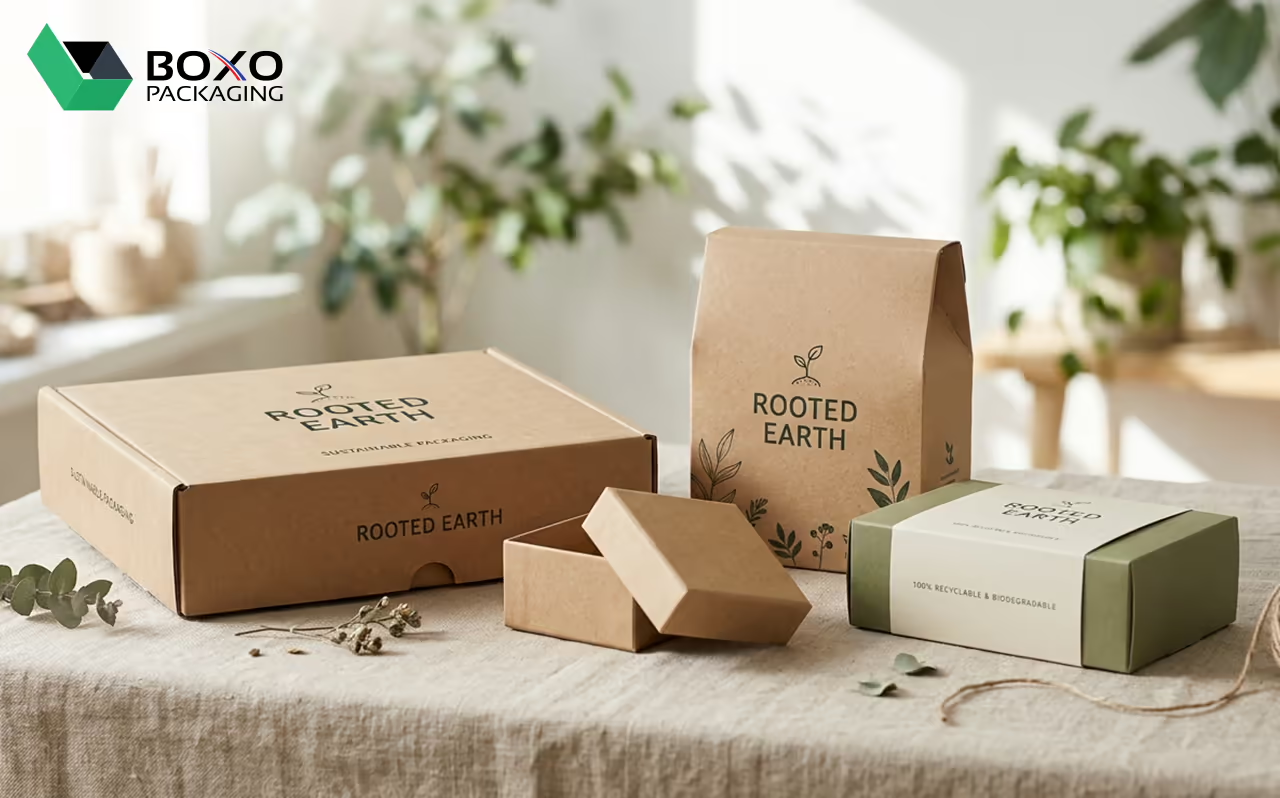
Shoppers notice a box before they notice a brand story, and many now read it as a sign of how a business thinks. A plain brown carton with honest wording can build trust, while a vague green claim can quietly lose it. Understanding how Eco-Friendly Boxes affect consumer behaviour helps you decide what to say and what to leave out. Here is what to look at, with a simple check for each point.
Why Shoppers Read the Box as a Signal
Customers rarely study materials, but they do notice texture, colour and wording. A natural finish and a tidy design suggest care, while heavy plastic coatings or glossy extras can send the opposite message. Ask a few friends or regular customers to hold a sample for thirty seconds and say what they think it tells them about your brand. Their first impressions are often more honest than any survey.
Where Trust Is Won or Lost
People are wary of big claims. A carton that says “green” without explaining why can feel like decoration, and shoppers increasingly check. Keep wording short, factual, and specific, such as what the board is made from and how to dispose of it. Avoid printing environmental claims unless your supplier can show you evidence you can verify. Rules on environmental and recycling claims differ by region, so check the current requirements for your market. This is general information, not legal advice.
Does a Greener Box Change What People Buy?
For some shoppers, yes. A thoughtful carton can tip a choice between two similar products, build loyalty with repeat buyers, and encourage people to keep or reuse the box. It will not rescue a weak product or a high price. Treat the box as one part of the story and test it with real customers, such as a stall, a shelf or a small online batch, before you commit to a large run.
Reuse, Recycling and the Unboxing Moment
A box that is easy to flatten, reuse or recycle feels considerate. One packed with layers of filler and mixed materials can feel wasteful, however it is described. Open a sample as a customer would and count how many separate materials appear. Simpler is usually better. Check that the box still protects the product, because a damaged order undoes any goodwill the material choice created.
Four Details to Confirm Before You Request a Quote
Send these together, and your quote will be quicker and easier to compare:
- The internal length, width and height, measured around your finished product
- The board type and strength needed for the filled weight
- The print colours, finishes and the wording you plan to include
- Your first order quantity and the reorder volumes you expect
Letting Real Customers React to a Sample
A flat drawing cannot show how a carton feels in the hand or what a shopper reads from it. At Boxo Packaging UK, the process starts with you sending over your product, so the fit is judged against the real item. You then request samples, test them with your own filler, handling and posting routine, and review the fit, print and structure together.
Production begins only once you are satisfied, which makes it easier to settle on Eco-Friendly Boxes that suit your range. Greener cartons shape behaviour when they are honest, simple and well made. Boxo Packaging UK supports that careful, sample-first approach, so your boxes earn trust from the first glance to the last unboxing.

How Retail Packaging Is Made: A Practical Guide from Flat Sheet to Shop Shelf
Most buyers meet a Retail Boxes at the very end, flat-packed and ready to fill, with little idea of what came before. Knowing how Retail Packaging is made makes briefing far easier, because every step from sheet to carton leaves a mark you can plan for. This guide covers the production steps, shapes, board, print, costs, and checks so you can brief a supplier clearly.
From Flat Sheet to Finished Carton, Step by Step
A retail box is printed, coated, die-cut, creased, stripped, glued, and checked, usually in that order. Each stage is a chance to catch a problem or create one. Printing comes first, on large sheets that hold several cartons at once. Coatings follow, then a cutting tool shaped like your dieline stamps out the carton and presses in the fold lines. Board also has a grain direction, and folds are cleaner when they run with it. Good suppliers place your dieline on the sheet with that in mind, which is one reason a simple layout change can improve both strength and finish.
Shapes That Come Off the Same Production Line
Most shop cartons are variations on a few proven structures. Choosing one of these usually keeps tooling costs sensible.
- Straight Tuck: Both flaps close in the same direction, simple and good for light, small items.
- Reverse Tuck: Flaps close in opposite directions, giving a neater front and a secure closure.
- Auto Lock Base: A base that snaps into place when the carton is opened, suited to heavier products.
- Hanging Carton: A carton with a punched hang tab for peg displays.
Board, Grain and Weight
For retail cartons, 300 to 400 GSM SBS board is the usual choice, because it takes fine print and folds neatly. Kraft board at 250 to 350 GSM suits natural brands, though ink looks softer on brown stock. Heavier board feels more premium and resists dents, but it adds cost and can crack on tight folds. Where cartons travel in bulk, an E flute corrugated outer shipper protects them, with B flute for heavier master cartons.
Print, Coating and the Checks That Follow
Digital printing suits short runs and seasonal lines, while offset gives consistent colour on larger orders. Flexographic printing is common on Kraft and corrugated, normally with water-based inks. Large areas of dark ink combined with heavy lamination can crack along the folds, so ask for a test on the real board. Before packing, cartons are inspected for colour, cut accuracy, and glue strength. Foil adds sparkle but makes recycling harder, so use it sparingly.
What Shapes the Price and the Footprint?
Price follows quantity, board weight, print method, finishing, and any special tooling. Knowing how Retail Packaging is made helps you see why a custom shape costs more than a standard one. At Boxo Packaging UK, we usually ask for product weight, dimensions, and sales channel before suggesting a board grade.
Cartons that sit under others on a pallet need more strength than ones packed straight onto a shelf. FSC-certified board shows responsible sourcing, but avoid claiming a box is “fully green”, as every material has some footprint. Lighter Kraft is easier to recycle, yet it gives less rigidity than thicker board.
Sample, Proof and Timing before Production
Ask for a physical sample and fill it with real product, not a dummy. Stand it on a shelf, handle it roughly, and check the proof for barcode position, spelling, and colour. Allow extra lead time too, since production and freight can take several weeks. A reliable supplier will question your specification rather than simply accept it. That is how we work at Boxo Packaging UK, because fixing a problem early costs far less than a reprint, especially with how Retail Packaging is made and tested.