
How Gable Boxes Are Made and Assembled
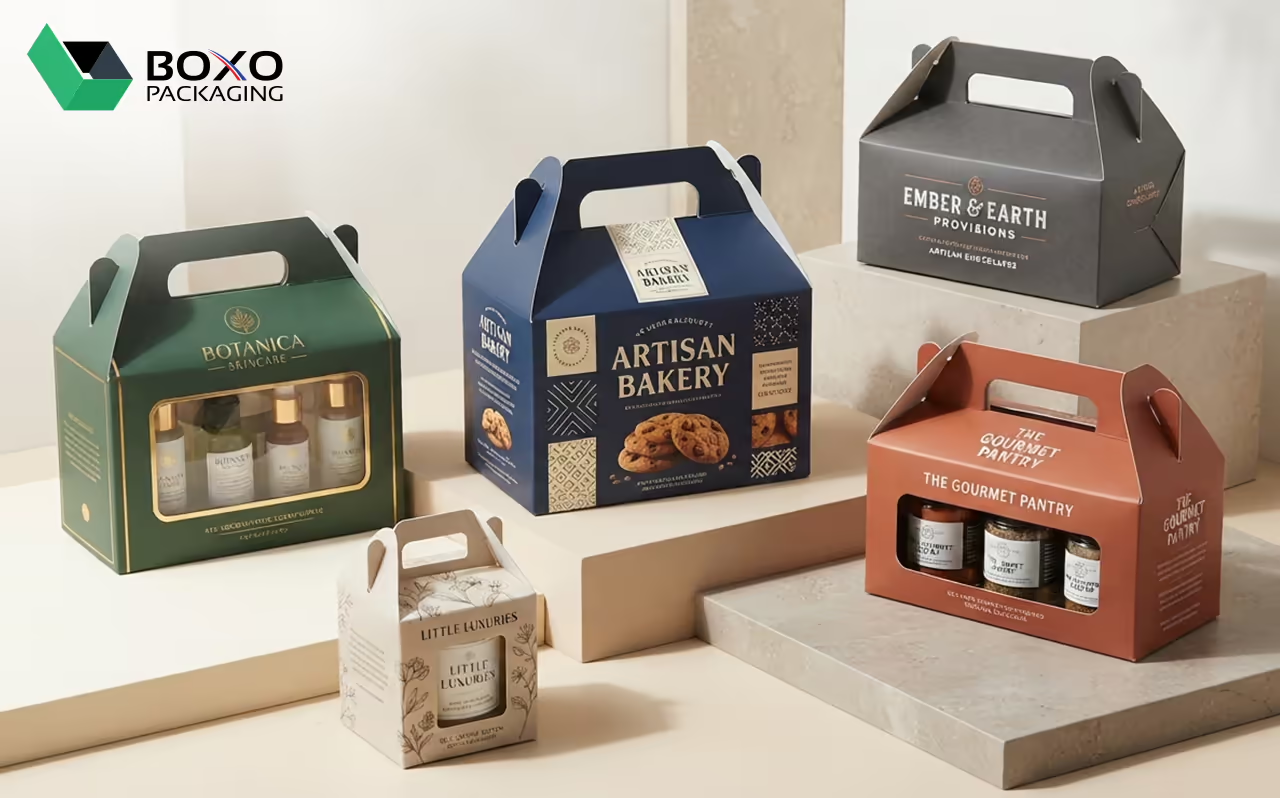
Follow one sheet of board through a factory, and you will see why a carton with a handle needs more care than a plain box. The way Gable Boxes are made and assembled decides whether that handle holds, so each stage is worth understanding. This guide covers the factory steps, assembly, board, print, costs and ordering checks so you can brief a supplier clearly.
From Flat Sheet to Cut Shape
A gable carton starts as a flat printed sheet, which is then coated, die-cut, creased and stripped of waste. Everything that follows depends on how cleanly this stage is done. Sheets are printed several cartons at a time. A steel cutting tool shaped like your dieline then stamps out the outline and presses in the creases. Board has a grain direction, and roof folds are crisper when they run with it, so a good supplier positions the layout with that in mind. The offcuts are stripped away, and the cartons leave the line flat, ready for glueing.
How the Roof, Lock and Base Come Together
Assembly is mostly folding and locking, with one glued seam holding the sides together. Cartons normally arrive flat with that seam already glued, so you only fold and lock them.
- Side Seam: A narrow glued strip that turns the flat sheet into a tube, usually done by machine.
- Base Lock: Interlocking flaps that snap together and hold the base without tape or glue.
- Roof Panels: Two angled sides that meet in the middle and pinch together to create the carry handle.
- Handle Slot: A cut in the roof panels where your fingers go through, which also spreads the weight across the board.
Board Choices That Set Handle Strength
SBS board at 300 to 400 GSM gives a firm handle and a clean surface for colour. Kraft board at 250 to 350 GSM suits a rustic look, though lighter grades may bend under heavier contents. If food touches the board, UK food contact rules apply. Ask your supplier for a declaration of compliance covering the board, any coating and the inks. Greasy or wet food also needs a liner or barrier coating, because plain board softens and the handle weakens first. For bulk delivery, an E flute or B flute corrugated outer keeps the roofs from being crushed.
Print and Finishing Before the Cut
Print goes on while the board is still a flat sheet, so artwork has to be placed with the folds in mind. Roof creases stretch once the carton is built, so keep logos and small text on the flat side panels. Digital printing suits short runs, offset gives steady colour on larger orders, and flexographic printing works on kraft with water-based inks. Foil and heavy lamination look smart but make recycling harder.
Where the Cost Builds Up
Quantity, board weight, print method, windows and finishing all move the price. Understanding how Gable Boxes are made and assembled shows why a window or an insert adds cost, since each one means an extra step on the line. Before we suggest any board grade at Boxo Packaging UK, we ask what the product weighs, how big it is and where it will be sold. Handle strength depends on the load, so that answer often decides whether lighter board will do.
FSC-certified board shows responsible sourcing, but avoid claiming a box is "fully green," as every material has some footprint. Thinner kraft is easier to recycle, yet it protects less than thicker board.
Checks Worth Making Before You Release the Order
Ask for a physical sample and fill it with real product, not a dummy. Lift it by the handle, carry it around for a few minutes and check that the lock holds. Look over the proof as well, especially text near the folds. Allow extra lead time too, since production and freight can take several weeks.
A good supplier will question your specification rather than simply accept it. That is how we work at Boxo Packaging UK, because fixing a problem early costs far less than a reprint, especially with Gable Boxes.
How Much Does Eco-Friendly Packaging Really Cost?
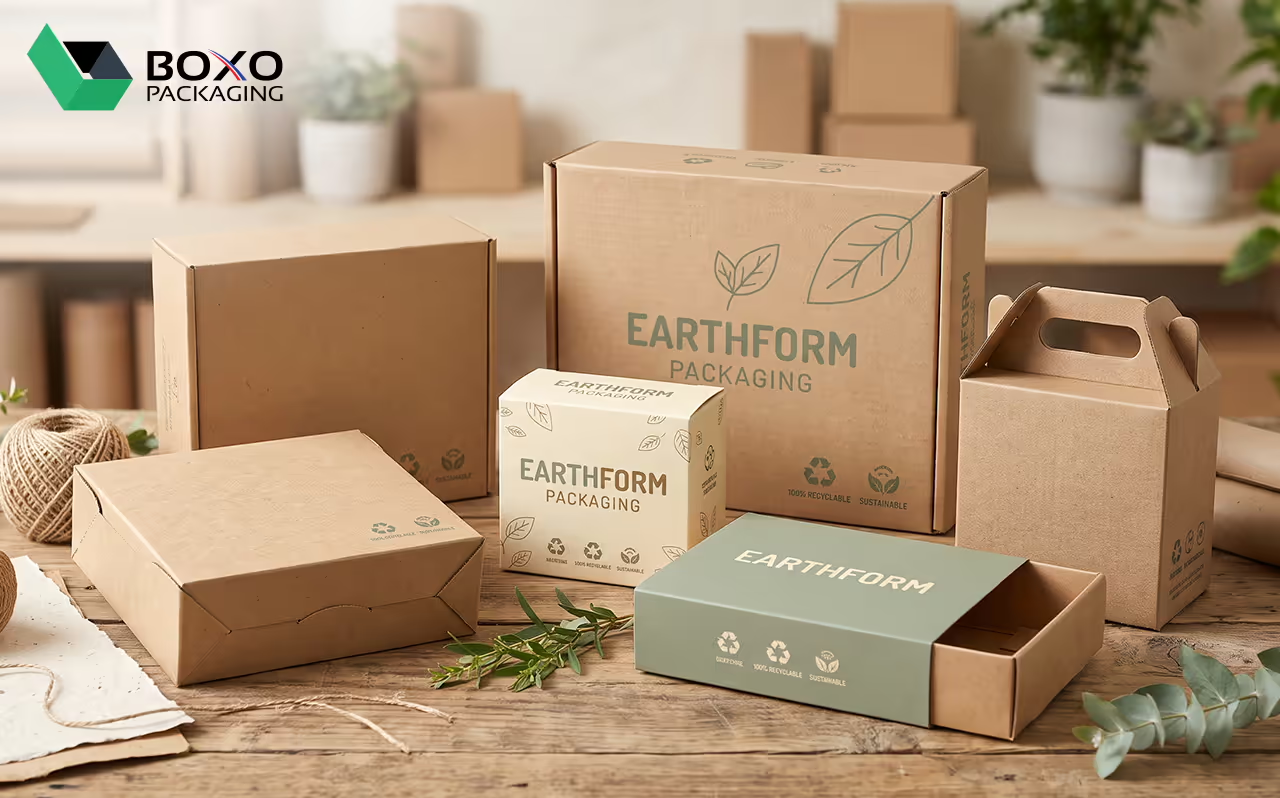
Ask three suppliers for a green quote, and you may get three very different prices, because the label tells you little about the build. Working out how much Eco-Friendly Packaging really costs means looking at board, print, finishes and what a failure would cost you. This guide covers price drivers, materials, hidden costs, honest claims and ordering checks so you can brief a supplier clearly.
The Short Answer on Price
Sometimes it costs a little more, sometimes it costs less, and the build matters more than the label. A plain kraft carton with one colour print is often cheaper than a white carton with foil and heavy lamination. Recycled or certified board can carry a premium, depending on the grade and the supplier. Rather than trusting a rule of thumb, ask for two quotes on the same carton, one in your current board and one in the greener option, and compare them line by line.
Where the Money Goes, Line by Line
Four items make up most of a quote, and each one gives you a lever to pull.
- Board: Weight and grade set the base price, so a lighter board saves money only if it still protects the product.
- Print: Digital works well when you only need a few hundred, while offset costs less per carton on bigger orders.
- Tooling and freight: A new cutting tool costs money, and so does shipping bulky cartons, so odd shapes push both figures up.
- Finishes: Foil and soft-touch lamination push the price up and make recycling harder.
Materials Compared on Strength
For shipping, corrugated in E flute suits lighter goods, B flute handles stacking and heavier loads, and double wall carries fragile or bulky items. Paperboard or moulded pulp inserts cost a little more than foam but are easier to recycle.
Costs That Never Appear on the Quote
A carton that fails costs far more than its unit price. Damaged goods need remaking, reshipping and apologising for, and all the material in the first attempt is wasted. Storage matters too. Flat-packed cartons save space, while rigid boxes fill a pallet quickly, and unsold stock ties up cash.
At Boxo Packaging UK, the first questions are about weight, size and sales channel, because those answers decide how much board you really need. Paying for strength you do not need is as wasteful as saving on board that then fails.
Claims Cost Nothing Until They Go Wrong
Printing a green claim is free, but a vague one can damage trust. Keep wording short, factual and specific, such as the board type and how to dispose of it. Avoid claiming a box is "fully green", as every material has some footprint. If you sell in the UK, check the Green Claims Code before printing anything. Only use claims your supplier can back with evidence you can verify. This is general information, not legal advice.
Sample Run, Proof and Timing Before You Order
Ask for a physical sample and fill it with real product, not a dummy. Carry it, stack it and check the proof for colour, wording and closure. Count the separate materials in the box, because fewer usually means easier recycling. Allow extra lead time too, since production and freight can take several weeks.
A reliable supplier will question your specification rather than simply accept it. That is how we work at Boxo Packaging UK, because fixing a problem early costs far less than a reprint, especially with Eco-Friendly Packaging.

How Do Soap Boxes Stop Stains and Scent Loss?
Leave a fresh bar in a plain carton for a few weeks, and the board often tells the story: a dark patch, a greasy corner, a faint smell that was once much stronger. So how do Soap Boxes stop stains and scent loss? The honest answer is that good ones slow both, rather than stop them completely. This guide covers what happens to a bar, the defences, board, labelling, costs and testing so you can brief a supplier clearly.
What Happens to a Bar Inside a Carton
A bar keeps changing after it is boxed. Moisture leaves it, oils move outwards, and fragrance escapes, and plain board soaks all three up. Cold process bars that are not fully cured release the most. The oils spread into the board and show as a dark stain, while the scent drifts into the room or the carton instead of staying with the soap. Board is porous, so no carton can seal scent in completely. Strong fragrance oils may still be noticeable on the outside, which is worth knowing before you promise customers otherwise.
Four Defences Against Stains and Fading
Each defence tackles a different part of the problem, and the best results usually come from combining two or three.
- Full cure: A bar that has dried properly releases far less moisture and oil once boxed.
- Grease-resistant liner: A layer on the inside of the carton that holds oil back before it can reach the board.
- Inner wrap: A thin paper or glassine layer between bar and board that catches oils and holds some scent.
- Snug fit: A carton sized to the cured bar, because movement rubs oils into the surface.
Board and Coatings That Cope With Oils
For folding cartons, SBS board at 300 to 400 GSM gives a firm structure and a bright surface, while Kraft board at 250 to 350 GSM suits natural, handmade brands. Plain board of either kind will stain if the recipe is rich in oils, so ask about a liner or coating. Barrier coatings improve protection, but they can make recycling harder, so ask what your local collection accepts. For posted orders, an E flute corrugated outer adds crush protection without much bulk, and B flute suits heavy multipacks.
Print, Labels and Legal Details
Handmade soap counts as a cosmetic product in the UK, so the pack needs ingredients, batch number, nominal weight and the responsible person's address. Leave space for them on the dieline early, away from folds and any window.
Water-based inks are a sensible default, and digital printing suits short runs and several scents. Heavy ink coverage on uncoated board can mark more easily if oils reach it, so ask your supplier for a test on your chosen stock.
Paying for Protection Without Overspending
A liner, coating or inner wrap adds cost, but stained cartons and returned orders usually cost more. Quantity, board weight and finishing still drive the price, and larger runs lower the unit cost. Boxo Packaging UK starts with a few plain questions about weight, size and sales channel, since the board grade depends on the answers. A bar sold at a market stall and one posted across the country need different levels of protection.
FSC-certified board shows responsible sourcing, but avoid claiming a box is "fully green", as every material has some footprint. Foil and window film can also complicate recycling, so use them with care.
A Week-Long Test Before You Place the Order
Ask for a physical sample and fill it with a real, cured bar rather than a dummy. Leave it for several days, then check for oil marks, scent transfer and any loosening of the closure. Review the proof for spelling, legal text and colour. Allow extra lead time too, since production and freight can take several weeks.
A good supplier will question your specification rather than simply accept it. That is how we work at Boxo Packaging UK, because fixing a problem early costs far less than a reprint, especially with Soap Boxes.